Surge of New Listings in NYC Expanded Buyers' Options in January
Real Estate Kenny Lee February 25, 2026
Real Estate Kenny Lee February 25, 2026
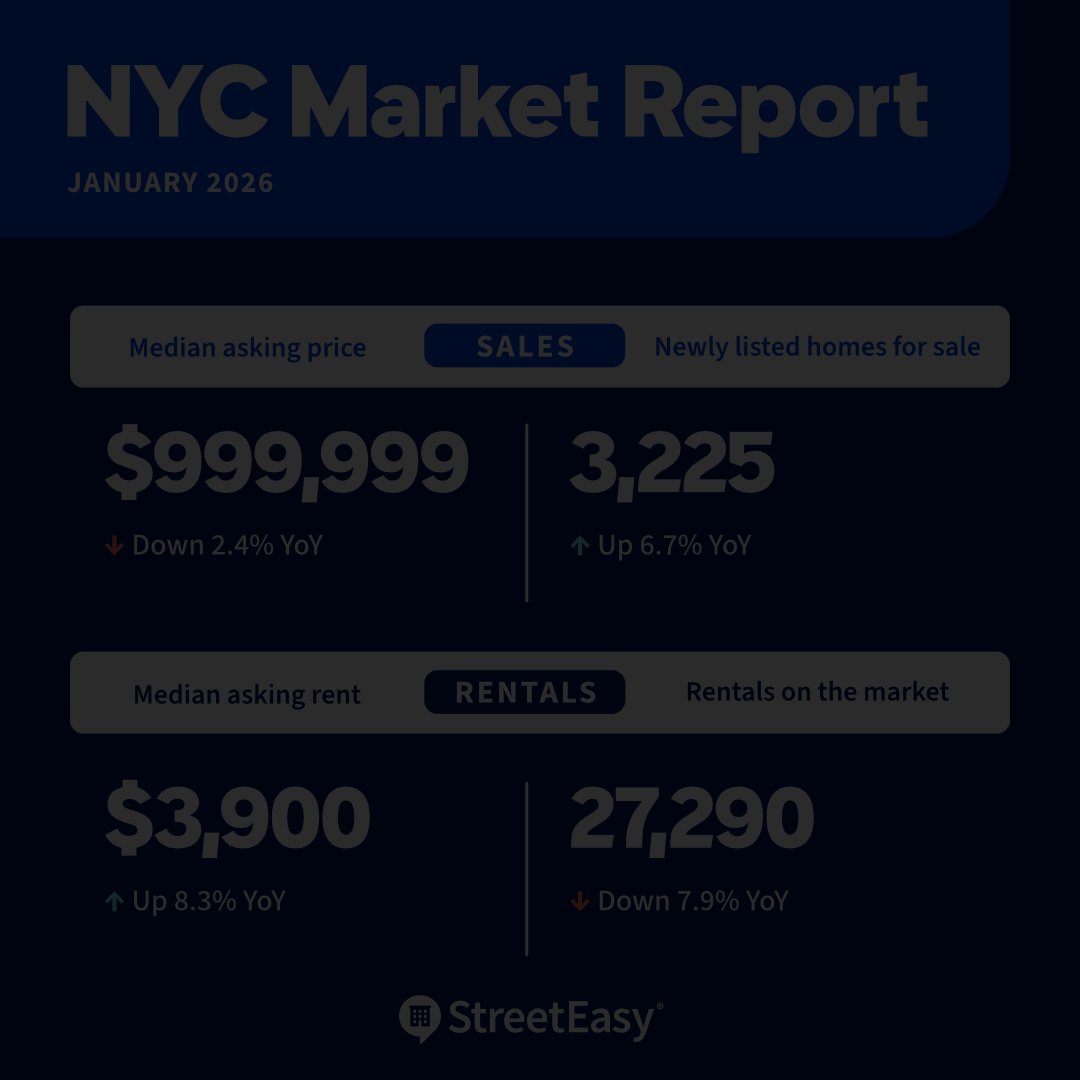
New York City’s housing market began 2026 with steady contract activity, supported by lower mortgage rates and a surge in new listings. In January, 1,479 homes entered contract, nearly unchanged from the previous year (Lee, 2026). Sellers continued to adjust pricing, which pushed the citywide median asking price down 2.4% to $999,999 (Lee, 2026).
Manhattan led the market with 733 new contracts, a 5.6% increase year-over-year. Luxury properties drove this growth, with contracts in the top third of the market rising 29% and the top 10% increasing 18.8%. Price thresholds for these segments fell to $2.475 million and $6.995 million respectively, making them more attractive to high-end buyers (Lee, 2026).
Brooklyn, however, saw a slowdown, with contracts dropping 12%. Condos were hit hardest, declining 15.3%. Despite this, demand for upscale condos remained strong, with over 60% of contracts involving properties priced above $1 million (Lee, 2026). Queens bucked the trend, recording a 4.3% increase in contracts. With a median asking price of $678,000, Queens appealed to budget-conscious buyers, particularly in Forest Hills and Flushing, which emerged as the borough’s busiest markets (Lee, 2026).
Renters faced mounting challenges in January as inventory fell 7.9% year-over-year to 27,290 units, driving the median asking rent up 8.3% to $3,900 (Lee, 2026). Manhattan remained the most competitive rental market, with inventory declining for the 23rd consecutive month and median rents climbing to $4,595. Upper Manhattan was the only area to see an increase in available units (Lee, 2026).
Brooklyn and Queens offered more rental options thanks to new developments, which expanded supply despite overall declines. Downtown Brooklyn, Gowanus, and Long Island City were among the neighborhoods adding the most new rentals in 2025, often featuring modern amenities. Concessions became more common, with 23.9% of Brooklyn rentals and 23% of Queens rentals offering incentives such as free rent, compared to 20.4% in Manhattan (Lee, 2026).
January’s data shows a market in transition: buyers benefited from increased inventory and adjusted prices, while renters struggled with limited supply and rising costs. New developments in Brooklyn and Queens helped ease rental pressures, but affordability remained a citywide challenge (Lee, 2026).
Lee, K. (2026, February 16). Surge of New Listings in NYC Expanded Buyers’ Options in January. StreetEasy. Retrieved from https://streeteasy.com/blog/new-listings-surge-expand-buyer-options
Stay up to date on the latest real estate trends.

Real Estate
Despite their reputation as outdated, prewar co-ops are proving to be resilient, desirable, and financially sound investments. The market shift suggests that condos ma… Read more

The sun reflects off the glass facades of luxury condominiums, and the scent of summer is in the air. For those currently navigating the competitive world of Manhattan… Read more

The City Council is weighing a package of reforms that would reshape how co-op boards approve, and reject, buyers. Here's what's on the table.
If you own — or are thinking about buying — a New York City home that isn't your primary residence, this one's worth two minutes of your time.

Nearly every conversation about the Manhattan market lands on the same question: what will the Fed do next? It’s a fair question — but probably the wrong obsession.

Real Estate

Lifestyle

Lifestyle
Jazz Vibes and Village Living: Top Clubs Near Greenwich Village Apartments for Sale

Lifestyle
The Ultimate Manhattan Brunch Guide: Best Spots Near Your Favorite Chelsea Coffee Shops
We pride ourselves on informing and educating our clients in order to make better real estate decisions. Contact us today!
Get In Touch With Our Team To Learn More

The Celeste Pandhi Team
SERHANT. 372 W Broadway New York NY 10012