If Spring Hasn’t Sprung, Here Are 5 Things To Do Right Now
Real Estate John Walkup May 18, 2026
Real Estate John Walkup May 18, 2026
The trope of the busy spring season for real estate isn’t hyperbole.
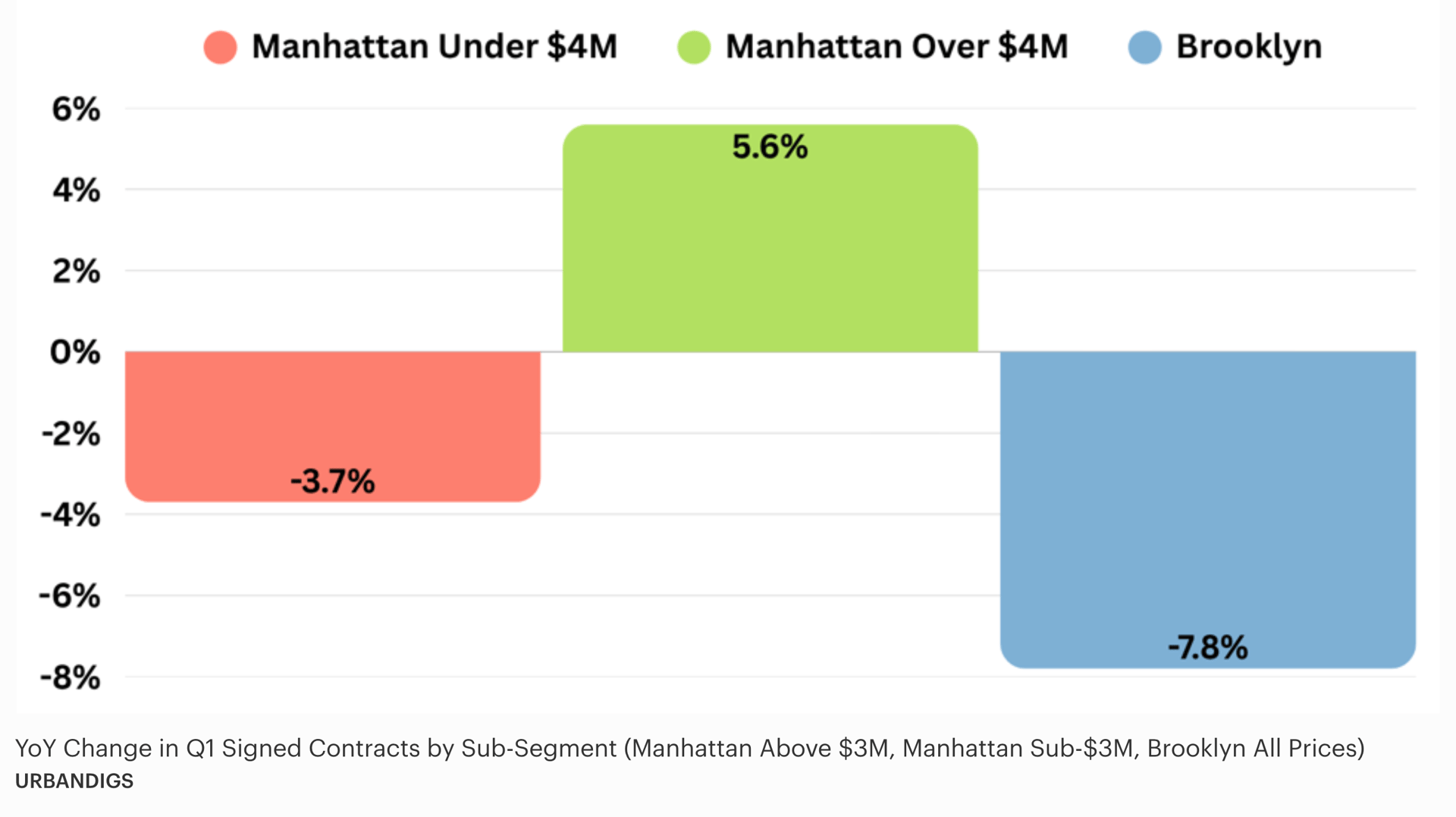
According to UrbanDigs data, during Q1 2026, the median Manhattan sales price was $1.25M, up 5.1% year over year. Deals over $4M increased by 5.6%. More recently, April has nearly 140 contracts signed for units over $4M to date, compared with 108 at this point last year. With that in mind, if your listing has been sitting through all of that, the problem isn’t the market. The problem is your listing.
The good news is that May is still May. Traditionally, May boasts the second-highest average number of deals within a given calendar year, with March seeing the most. That’s the good news. The bad news is that activity winds down pretty quickly in June. Still, sellers have a few weeks of serious buyer attention before activity throttles down for the summer. Here are five things to do before June rolls in and buyers lose interest.
A 1.5% price cut signals nothing, except that another trim is coming. Real estate has a behavioral equivalent of the Fed’s forward guidance: price cuts tell the buyer pool what you actually think. A $25K "reduction" on a $1.5M asking price reads as stubbornness. A $105K reduction, on the other hand, reads as a statement.
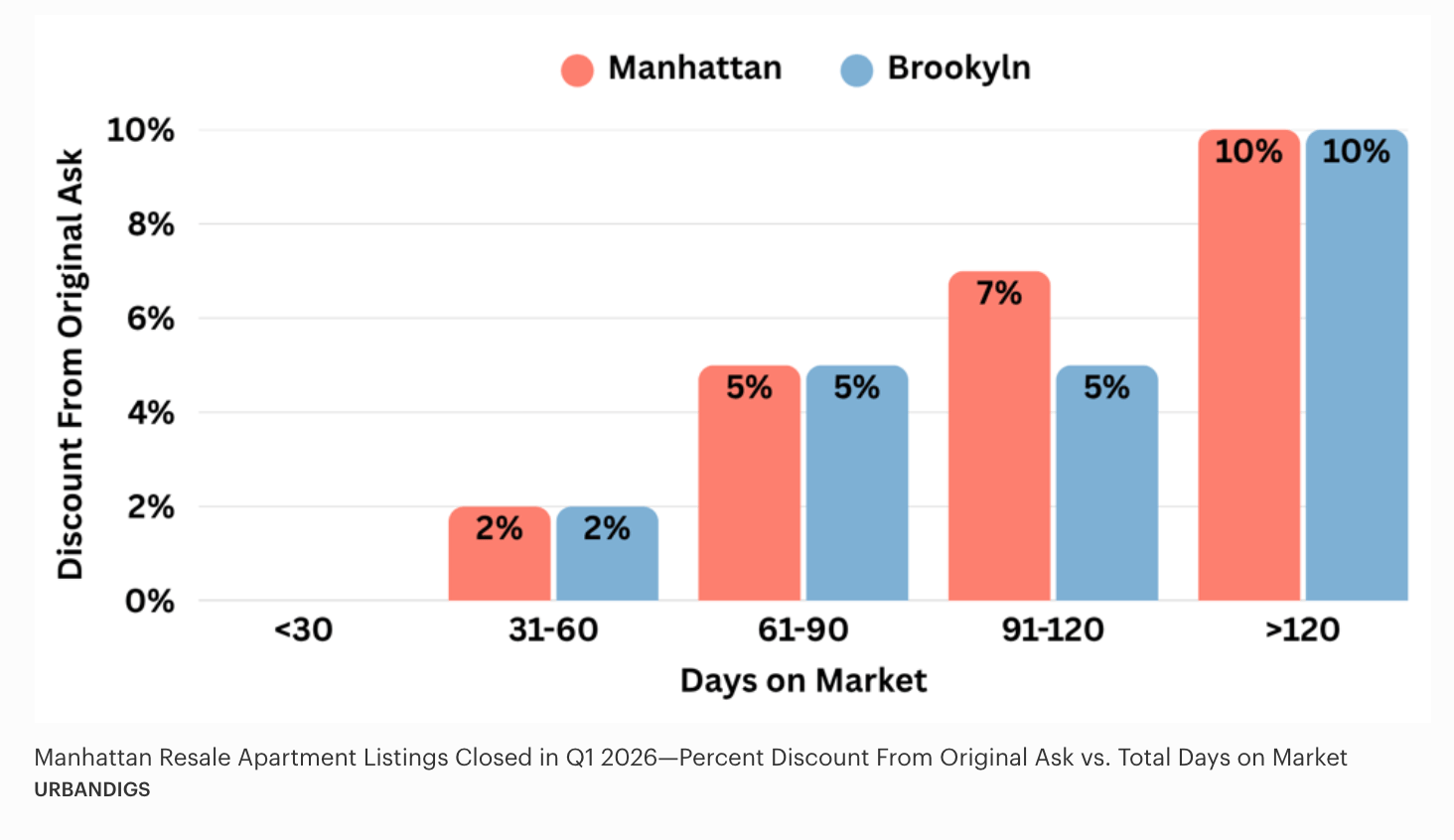
Better yet, the math backs it up. For listings that eventually close in Manhattan, the median cumulative price cut widens materially once a listing has been on the market for 90 days. The first cut sets the anchor. Make it count.
And if you are counting on falling mortgage rates increasing the buyer pool, that plan has gotten weaker, not stronger. The March FOMC minutes openly entertained hikes, and the market is currently not pricing in any further cuts for 2026. Hence, "waiting for rates" is a shrug, and not a strategy.
Active listings are advertisements. Signed contracts are reality. If the comp analysis you leaned on heavily drew from what your competitors were asking, you were essentially pricing against marketing, not against transactions. Check out the recent deals that actually closed in the last 90 days in your neighborhood and your building, weighing the most recent trades heaviest. Discount anything that sat on the market more than 120 days, because those prices were already stale by the time they cleared.
If three open houses and a dozen showings have not produced a bid, the listing is the problem, not the buyer pool.
The potential number of buyers is smaller, but it is not nonexistent. The UrbanDigs Listing Climate indicator for Manhattan overall is down roughly 5% from last year, but remains above the “Easy Listing Climate” threshold. This means that buyers are out, so your potential buyers are showing up selectively after parsing your listing for fit. In other words, your listing could be skipped for reasons other than price: a non-descriptive description, tired photography, or a floor plan that looks like it belongs on an IQ test.
How to fix it? Experiment with new photos. New copy. New staging where it counts. Relaunch the listing if the platform allows. A fresh listing can reset buyer attention even when the underlying home hasn't changed.
UrbanDigs data shows Manhattan prices were up 5.1% year-over-year during Q1. However, the segment story is more interesting and more useful.
Manhattan deals above $4M rose 5.6% year-over-year in Q1. Co-op inventory is down 8% year over year, which means a well-priced co-op is genuinely scarce right now. Brooklyn is a different conversation entirely: Q1 signed contracts fell nearly 8% year over year, the second straight YoY in a row, while active inventory rose 3%.
So, your hyper-local sub-market is the only one that matters to you. A $2.5M Brooklyn brownstone is playing a different game with different buyers than a $6M Upper East Side condo. Price, positioning, and urgency all flow from that.
The spring season in Manhattan winds down quickly once June rolls around. By June 1, if you aren’t in negotiations or close to a deal, expect fresh buyer traffic to desiccate. Real estate is seasonal, and contract activity across the city drops notably between mid-June and September. After that, you will be dragging along, and possibly cutting your price to get attention from buyers, until they come back in October. Viewing June 1 as a hard deadline can bring difficult choices to the forefront and spur action before the summer doldrums arrive.
If you do nothing, nothing will likely happen — but in NYC, doing nothing costs something.
Here’s how it will play out if the listing drifts into summer: maybe a price cut here, another price cut there, and, because there are no buyers, the cumulative price cut widens. Eventually, a sale might happen in the fall, but the final price will likely be well below where an aggressive May reprice would have landed. It’s a triple whammy: you lose on price, you lose on opportunity costs, and you get to pay for the hassle.
If you’ve been on the market for more than 60 days, the market is clear on what it will pay. Stop chasing aspirational prices from comps, and take action now to win a deal before it goes stale. Value is theoretical. Winning is behavioral.
Stay up to date on the latest real estate trends.

Real Estate
Despite their reputation as outdated, prewar co-ops are proving to be resilient, desirable, and financially sound investments. The market shift suggests that condos ma… Read more

The sun reflects off the glass facades of luxury condominiums, and the scent of summer is in the air. For those currently navigating the competitive world of Manhattan… Read more

The City Council is weighing a package of reforms that would reshape how co-op boards approve, and reject, buyers. Here's what's on the table.

If you own — or are thinking about buying — a New York City home that isn't your primary residence, this one's worth two minutes of your time.

Nearly every conversation about the Manhattan market lands on the same question: what will the Fed do next? It’s a fair question — but probably the wrong obsession.
Real Estate

Lifestyle

Lifestyle
Jazz Vibes and Village Living: Top Clubs Near Greenwich Village Apartments for Sale

Lifestyle
The Ultimate Manhattan Brunch Guide: Best Spots Near Your Favorite Chelsea Coffee Shops
We pride ourselves on informing and educating our clients in order to make better real estate decisions. Contact us today!
Get In Touch With Our Team To Learn More

The Celeste Pandhi Team
SERHANT. 372 W Broadway New York NY 10012